
Managing Energy Market Risk Like an Investment Portfolio

How New England Businesses Can Use Structured Energy Procurement to Reduce Market Risk
Energy costs in New England can swing sharply with changes in weather, natural gas supply, and regional transmission constraints. For commercial and industrial (C&I) organizations, those fluctuations can disrupt budgets and planning.
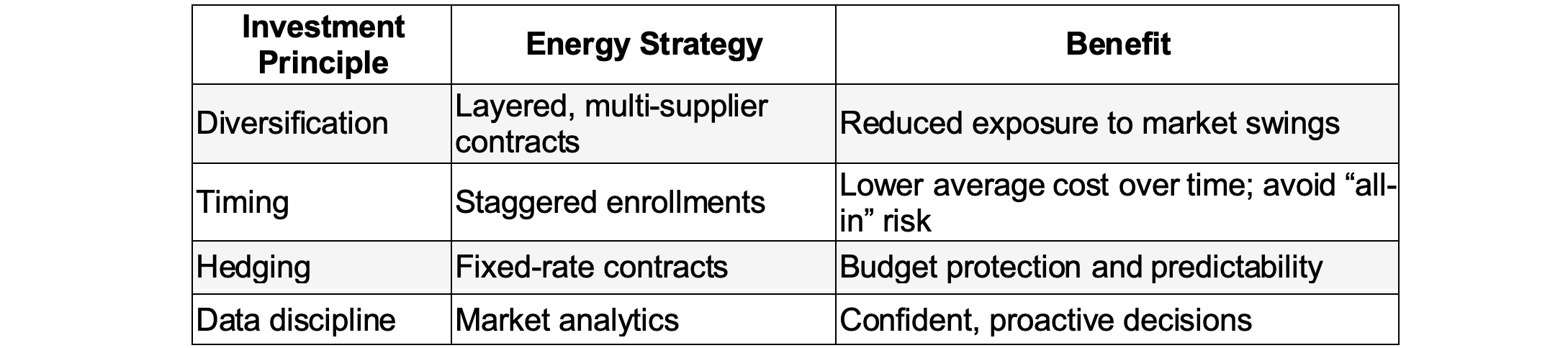
At Neighborhood Energy, we believe your energy strategy should be managed like an investment portfolio—structured, diversified, and data-driven. By applying proven financial principles such as diversification, timing, and hedging, your business can achieve long-term cost stability and reduce exposure to market volatility.
Diversify Your Energy Portfolio
In investing, diversification spreads risk across multiple assets. In energy procurement, it means avoiding reliance on a single supplier, contract, or rate type.
Smart diversification strategies include:
Layered contracts: Stagger start and end dates to smooth out pricing over time.
Geographic coverage: Use multiple ISO-NE zones or utilities for multi-site operations.
Balanced fuel mix: Combine renewable electricity with natural gas for cost control and sustainability goals.
This approach shields your organization from sudden market events—like winter fuel shortages or generation constraints—that can drive up prices across New England.
Time Your Contracts Strategically
Perfect timing is impossible—but structured timing works. In finance, investors “dollar-cost average” to avoid buying all at once. The same logic applies to energy.
Many C&I organizations make the common mistake of choosing one day to enroll all accounts. This is like putting everything on red in roulette—if the market moves against you that day, your entire energy budget is exposed to short-term swings.
A smarter approach is layering your enrollment over multiple dates and blending rate types. Lock in a portion of your load when forward prices are favorable—often in the spring or fall—while keeping some exposure open to benefit from potential short-term dips.
Example: A Massachusetts manufacturer might fix 70% of its electricity load for three years while keeping 30% indexed to ISO-NE’s day-ahead market, balancing predictability with flexibility.
Hedge Against Market Volatility
Fixed-rate contracts are your hedge against unpredictable market swings. When natural gas prices spike during New England’s winter peaks, fixed contracts protect your budget and preserve cash flow.
Neighborhood Energy helps clients design blended strategies that combine fixed and variable components to fit each site’s usage profile and risk tolerance—delivering the right balance between stability and opportunity.
Make Data-Driven, Not Reactive, Decisions
The best portfolio managers rely on analytics—not emotion. The same should be true for energy.
Our team tracks ISO-NE wholesale market data, capacity auctions, and natural gas basis pricing to identify optimal buying windows. This data-driven approach ensures you make informed, timely decisions instead of reacting to short-term market moves.
The Bottom Line
Partner with Neighborhood Energy
Energy markets in New England are complex—but your energy strategy doesn’t have to be.
Neighborhood Energy helps businesses structure electricity and natural gas supply the same way financial advisors structure investment portfolios: with discipline, balance, and foresight.
Contact us today to review your current contracts and learn how a tailored energy procurement strategy can deliver cost stability, manage risk, and strengthen your long-term bottom line.